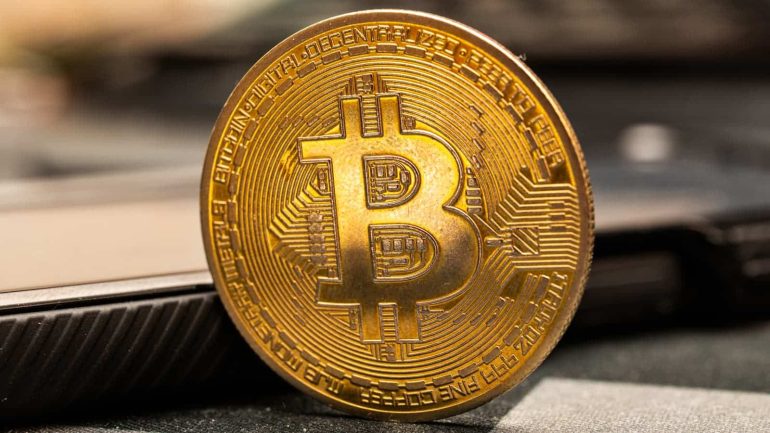
The Dawn of a New Monetary Epoch
When Satoshi Nakamoto published the Bitcoin whitepaper in 2008, few could have predicted how profoundly this invention would challenge our understanding of money. Bitcoin is not merely a piece of software or a speculative asset; it represents a paradigm shift—a decentralized antidote to the flaws embedded within traditional finance. More than fifteen years since its inception, Bitcoin’s journey has been a volatile but fascinating ride, compelling governments, investors, and everyday people to reconsider what currency can be in an increasingly digital world.
Demystifying Bitcoin: The Backbone of Blockchain
At its core, Bitcoin is a peer-to-peer electronic cash system, yet its true brilliance lies in the technology that enables it—blockchain. Blockchain is a public, distributed ledger that records every transaction ever made. Each transaction is bundled into a block, which is then cryptographically linked to the previous block, creating an immutable chain of information. This architecture removes the need for a trusted third party, such as a bank or government, to verify transactions. Instead, a decentralized network of computers, known as miners, maintains consensus and secures the network against fraud.
Scarcity and Digital Gold
Unlike fiat currencies that can be printed at will, Bitcoin’s supply is finite—capped at 21 million coins. This artificial scarcity is built directly into its code and enforced by the network’s consensus rules. The deflationary nature of Bitcoin has drawn inevitable comparisons to gold. Investors increasingly view it as a hedge against inflation and economic uncertainty, dubbing it “digital gold.” For those wary of central banks’ unchecked monetary expansion, Bitcoin offers a compelling alternative—a store of value immune to political whims.
The Volatility that Captivates and Repels
Any honest discussion of Bitcoin must acknowledge its notorious price volatility. Early investors recount tales of unimaginable gains, yet sudden crashes have wiped out fortunes overnight. Critics argue this instability undermines Bitcoin’s viability as a currency for daily transactions. However, many supporters believe such swings are typical of an emerging asset class still finding its place in the global economy. They suggest that as adoption increases and markets mature, price swings will likely dampen, creating a more stable environment for mainstream use.
Institutional Adoption: From Fringe to Finance Mainstay
Once dismissed by traditional finance as a passing fad or a tool for criminals, Bitcoin now finds itself endorsed by some of the world’s largest financial institutions. Wall Street banks offer Bitcoin trading desks, hedge funds allocate a portion of their portfolios to crypto, and publicly traded companies have added Bitcoin to their balance sheets as a treasury reserve asset. This institutional embrace lends Bitcoin a level of credibility that would have been unthinkable a decade ago and hints at a future where it coexists alongside conventional financial instruments.
Bitcoin’s Promise of Financial Inclusion
Beyond investment speculation, Bitcoin holds transformative potential for millions without access to reliable banking services. In regions with unstable currencies or authoritarian governments, Bitcoin allows individuals to store wealth and transact across borders without needing approval from intermediaries. Anyone with a smartphone and an internet connection can participate in the Bitcoin network. This promise of financial sovereignty has turned Bitcoin into more than a speculative asset; for many, it is a gateway to economic freedom.
Environmental Impact: The Energy Debate
One of Bitcoin’s most controversial aspects is the environmental cost of its “proof-of-work” mining mechanism. Verifying transactions and securing the network require vast amounts of computational power, translating into significant energy consumption. Detractors point out that Bitcoin’s carbon footprint rivals that of small countries. Yet, the debate is more nuanced than critics suggest. A substantial portion of Bitcoin mining already utilizes renewable energy sources, often tapping surplus power that would otherwise go wasted. Additionally, the push towards cleaner energy and more efficient mining hardware continues to grow, driven by both economic and environmental incentives.
Regulatory Uncertainty: Navigating Legal Frontiers
With Bitcoin’s ascent has come an urgent need for clear regulation. Governments worldwide have taken vastly different approaches, from outright bans to enthusiastic adoption and innovation-friendly frameworks. Some regulators fear that Bitcoin could facilitate money laundering or tax evasion; others see it as a driver of economic modernization. Investors and businesses await greater regulatory clarity, which will ultimately determine how seamlessly Bitcoin integrates into the broader financial system.
Challenges on the Road Ahead
Despite its impressive growth, Bitcoin’s future is not without hurdles. Scalability remains a pressing concern, as the network can only process a limited number of transactions per second. During peak demand, this results in high fees and slow confirmation times. Developers continue to work on solutions, such as the Lightning Network, which enables faster and cheaper transactions by handling small payments off the main blockchain. Another challenge is security. Holding Bitcoin requires private keys, and the loss or theft of these keys can mean irreversible loss of funds. User education and better custodial solutions will be critical to making Bitcoin truly accessible to the masses.
The Road Forward: Evolution or Revolution?
So, where does Bitcoin go from here? Will it topple traditional fiat systems or settle into a niche as digital gold? Its future depends on several intertwined factors: technological innovation, regulatory evolution, environmental responsibility, and, above all, public trust. Unlike a company with a CEO or a government with elected officials, Bitcoin’s survival depends on the collective will of its global community. Its decentralized nature makes it resilient but also means that its fate is ultimately shaped by those who believe in its promise.
Why Bitcoin Matters Today
-
Transparency: Bitcoin transactions are publicly verifiable, adding a layer of accountability.
-
Decentralization: No single entity controls the network, making it resistant to censorship.
-
Security: Cryptographic principles and economic incentives secure the network against attacks.
-
Accessibility: Anyone, anywhere, can participate without needing permission.
-
Innovation Catalyst: Bitcoin laid the groundwork for thousands of other blockchain applications.
Conclusion: A Legacy Still in the Making
Bitcoin is more than a currency; it is an idea—a radical experiment in decentralized trust that has forced the world to reckon with fundamental questions about value, sovereignty, and freedom. Whether one sees it as an engine for financial liberation or a volatile gamble, its impact is undeniable. As humanity stands at the threshold of an increasingly digital financial age, Bitcoin’s story reminds us that money, like any human invention, evolves. What started as an obscure whitepaper now stands as a symbol of how technology can challenge, reshape, and even democratize the very systems that govern our lives.